
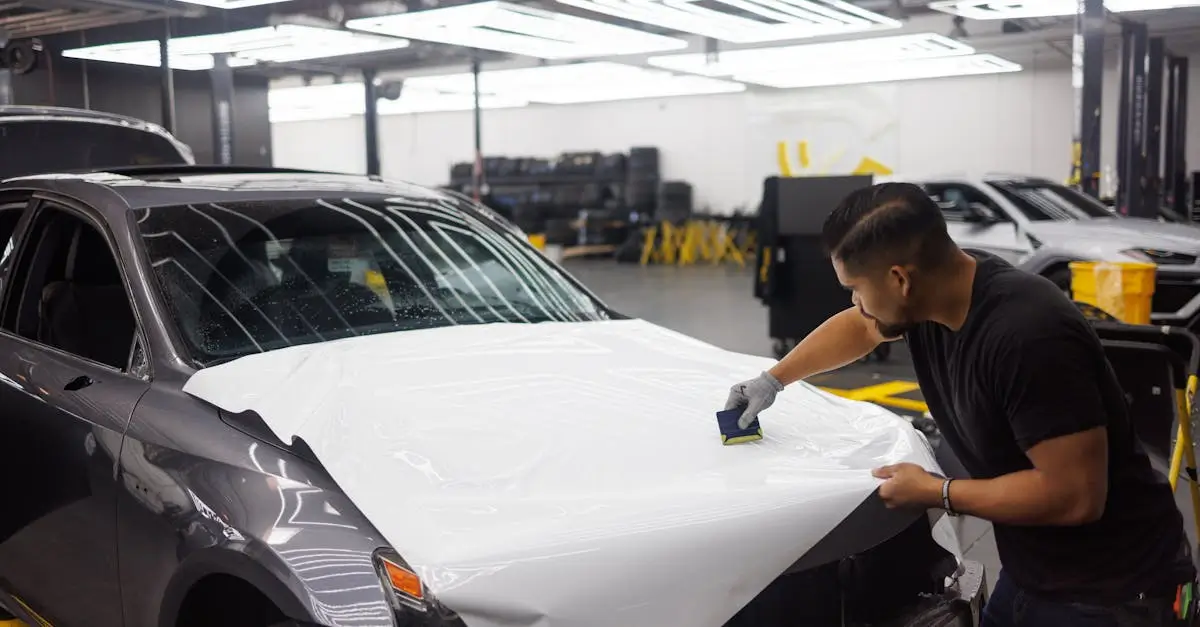
The Rise of Car Wrapping: Style Meets Smart Savings
If you’ve ever spotted a car on the road with a wild matte finish or a color that shifts with the light, chances are you’re looking at a wrap—not a paint job. In the last few years, car wrapping has totally changed how people approach customizing their vehicles. What used to be something for high-end show cars or businesses with branded fleets is now pretty mainstream. Why? Because it’s flexible, cost-effective, and kind of addictive once you realize how easy it is to switch things up.
The beauty of wrapping your car is that you’re not stuck with it forever. Unlike paint, which is permanent and pricey to redo, vinyl wraps can be peeled off whenever you feel like a change. So, whether you lease your ride or own something a little more high-end that you want to preserve, wrapping makes a lot of sense. It adds style while protecting your original paint from scratches and sun damage. Smart move, right?
And there’s an eco-friendly side too. Traditional car paint often releases VOCs (that’s short for volatile organic compounds), which aren’t great for you or the environment. Vinyl wraps, on the other hand, offer a cleaner, more sustainable way to revamp your vehicle’s look. You get to stay stylish and feel good about it.
How Much Does a Car Wrap Cost?
Now, let’s get down to what everyone really wants to know — the cost. Car wrapping prices vary, and a lot depends on your car’s size and the kind of material you choose. According to Car and Driver, if you’ve got a smaller car like a coupe or hatchback, you’ll probably spend somewhere around $2,000 for a full wrap. Bigger vehicles such as SUVs or trucks usually land in the $3,500–$6,000 range. If you’re going for something flashy like chrome or those mesmerizing color-shifting wraps, the bill can go north of $10,000 pretty easily. Yikes, but also… worth it for some, honestly.
Partial wraps are a different story. They’re perfect if you just want to cover the roof, hood, or doors — those usually run between $300 and $1,000 per section. Businesses love these for branding, and personal car owners often use them to create fun accent looks. Add custom graphics or logos, and you’ll tack on another $500 to $2,000, depending on complexity.
Then there’s the professional install. You’ll find shops that charge way less than others, but here’s the truth: experience matters. The really good specialists work in clean, climate-controlled spaces and know how to wrap a car without bubbles, creases, or peeling issues later. They might charge a bit more, but it shows in the result — and that’s not something you want to cheap out on.
Some even offer extra protective coatings, kind of like adding a shield on top of your wrap. Ceramic coatings, for example, can bump your cost by another $500–$1,000, but they help with UV damage and scratches. If you’re planning to keep the wrap for several years, that’s money well spent. Agreed?
What Actually Affects the Price?
It’s not just about the size of your car — though that’s a biggie. A small hatchback uses a lot less vinyl (and time) than something like, say, a Tesla Model X or a Jeep Wrangler. Plus, cars with complex curves or deep channels take more skill and patience. All that extra labor adds up.
Next, you’ll have to think about finish types. Standard gloss or matte wraps cost less, while fancy options like metallics, chrome, or color-changing varieties will test your wallet’s strength. That’s mostly because those films are more expensive and trickier to apply.
And, like any professional service, skill level counts. The best installers have spent years perfecting their craft. They know how to stretch and smooth wraps so they cling tight and flawless to the bodylines. Paying for that kind of precision often saves you from an expensive redo later. Seems fair, right?
Location also plays a sneaky role. Shops in major cities, especially places like Los Angeles or New York, charge more simply because their overhead costs are higher. The same job done in a smaller town might be a few hundred dollars cheaper. Ever noticed how that’s true for pretty much anything auto-related?
Choosing the Right Vinyl Finish
This part is where things get fun — and maybe a little overwhelming because wow, the options feel endless. If you love the look of traditional shiny paint, gloss wraps are the go-to. They’re sleek, budget-friendly, and easy to maintain. Matte finishes, on the flip side, create that stealthy, luxury vibe that’s been incredibly popular lately.
Can’t decide between the two? Satin wraps hit the middle ground. They reflect just enough light to look polished but still have that soft, muted feel. Personally, I think they look amazing on sports cars. Then you’ve got the ultra-premium finishes — chrome and metallic wraps. These are pure eye-candy and definitely stand out on the road. They also cost about twice as much as standard wrap materials, mostly because they’re tough to install.
Color-shifting (or iridescent) wraps are the latest trend. They change tones depending on lighting, so your car might look blue in the morning and purple at sunset. Sounds pretty cool, doesn’t it?
Custom printed wraps are another favorite, especially for businesses or people who want to give their cars a bit of personality. A local food truck, for instance, might use a full vinyl wrap with bright graphics and their logo splashed across the sides. These designs are printed using large-format printers and are often UV-resistant, so they hold up under sunlight. Companies like Avery Dennison and 3M are big names in the vinyl game — their products last for years and usually come with solid warranties.
Car Wrap vs. Paint Job: The Real Deal
Let’s be real — paint jobs will always have their place. But when you compare them to wraps, the difference in price and convenience is pretty striking. A decent professional paint job can easily run $3,000 to $10,000, and if you want something custom or multi-tone, it can push $15,000 or more. Most wraps, however, land comfortably between $2,000 and $5,000. That’s quite a gap for a similar finished look.
Another win for wrapping: it’s reversible. You can switch colors whenever you like or peel it off if you’re returning a leased vehicle. No harm done to the factory paint underneath — in fact, the wrap acts like armor, shielding against chips, scratches, and fading from sunlight.
As for longevity, good wraps last roughly five to seven years if you take care of them. Paint can hold its shine for longer — maybe a decade — but fixing chips and oxidation takes effort (and money). Wrapping makes it ridiculously easy to change things up. Want to go from matte black to candy red? A few days in the shop, and you’re done.
Speaking of time, wraps also win there. Most installations take about three to five business days. Paint jobs, on the other hand, need curing between coats, so you could be without your car for a week or two. For someone who needs their vehicle daily — especially businesses — that’s a huge bonus.
Final Thoughts
All things considered, wrapping your car offers a pretty sweet balance between looks, cost, and practicality. Whether you just want a touch-up or a head-turning full-body color overhaul, it’s an option worth exploring. You save money compared to repainting, you protect your car’s original finish, and you get the freedom to completely reinvent your ride. That’s a win on all fronts.
Of course, like any investment, quality matters. Go with reputable installers, pick a trusted vinyl brand, and take care of your wrap. Keep it clean, avoid harsh chemicals, and you’ll extend its life by years. Some people even say it becomes a bit of a conversation starter — and hey, who doesn’t like talking about their cool new car look?
If you’re still on the fence about trying it, just imagine rolling into a parking lot with a color you chose, a design nobody else has, and the option to remove it whenever you feel like something new. Not bad for a few thousand bucks, right?
For more informative blogs and resources, visit Lexus Sports Car.